
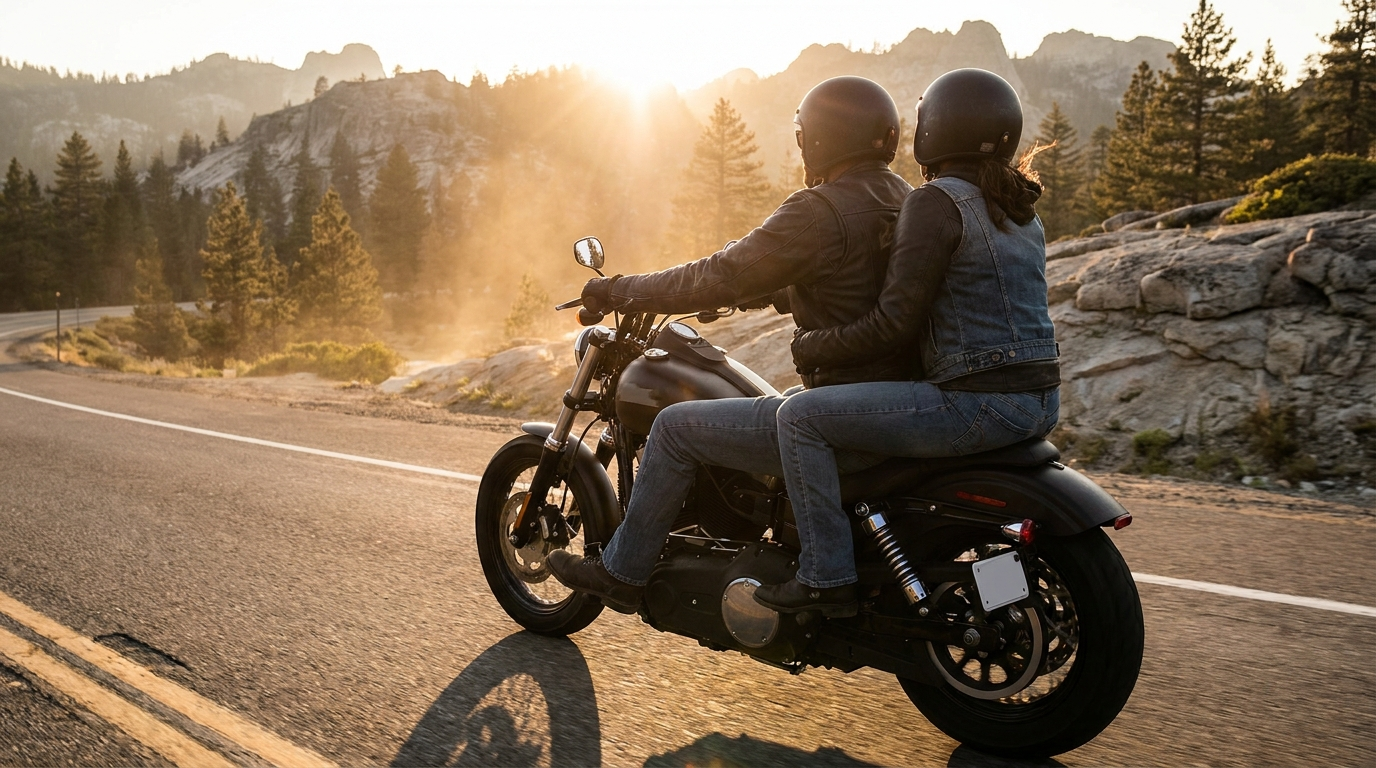
Riding two-up is simple to get right and easy to get wrong. The short version: prep your bike for the extra weight, give your passenger a two-minute briefing before you roll, have them mount only after you say so, and tell them to hold on, keep their feet on the pegs at all times, and lean with you, not against you. Do that and the person on the back becomes part of the machine instead of 150 pounds of chaos behind you. This guide covers how to set up your motorcycle for a passenger, what to tell a first-timer, what passengers should never do, and the passenger laws that actually exist in the US. Whether you are hauling your old lady to Sturgis or giving your buddy a lift to bike night, here is how to carry a motorcycle passenger without scaring them off the back seat forever.
What Does Riding Two-Up Actually Mean?
Two-up just means two people on one motorcycle: you on the controls, your passenger (the "pillion" if you want to get fancy about it) on the seat behind you. It sounds like nothing. It is not nothing. A passenger changes how your bike accelerates, brakes, turns, and balances. Your stopping distance gets longer, your front end gets lighter, and low-speed maneuvers get wobblier. None of that is a problem if you know it is coming. All of it is a problem if you find out mid-corner.
How Do You Prepare Your Bike for a Passenger?
Before anyone climbs on the back, give the bike five minutes of attention:
- Check your owner's manual for load capacity. Every bike has a maximum carrying capacity (GVWR minus the bike's wet weight). Rider, passenger, and gear all count against it. Most cruisers handle two adults fine, but know your number.
- Add suspension preload. Most bikes have adjustable rear preload. Stiffen it up for the extra weight so you are not dragging hard parts in corners or pointing your headlight at the treetops.
- Bump your tire pressure. Most manufacturers list a separate, higher pressure for two-up riding, usually on the swingarm sticker or in the manual. Run it.
- Confirm the passenger hardware. A real passenger seat and functioning footpegs are not optional. In most states they are the law, and everywhere they are common sense.
- Adjust your mirrors and headlight if needed. The extra weight squats the rear and changes both.
What Should You Tell a Passenger Before Their First Ride?
The pre-ride briefing takes two minutes and prevents 90 percent of two-up problems. Cover these points every time you carry a new passenger:
- Mount and dismount only on your signal. You get on first, both hands on the bars, bike steady. They wait for your word, then swing on from the left side.
- Hold on the whole time. Around your waist, on your hips, or on the grab rails if the bike has them. Their choice, but hands stay put.
- Feet stay on the pegs, always. Even at stoplights. Especially at stoplights. You hold the bike up, not them.
- Lean with you. The classic advice: look over your inside shoulder in a turn. Never fight the lean or throw body English into a corner.
- No sudden moves. Stretching, turning around to look at something, or shifting weight without warning at 70 mph is how good rides go bad.
- Agree on signals. A tap on the shoulder for "slow down" and a squeeze for "all good" beats screaming into the wind.
- Gear up. Helmet, eye protection, long pants, boots, and a jacket. The road does not care who was driving.
What Should a Motorcycle Passenger Never Do?
Print this out and tape it to your sissy bar. A passenger should never:
- Get on or off the bike without the rider's OK
- Put their feet down at stops
- Lean opposite the rider in corners
- Wiggle, stretch, or dance to the playlist at highway speed
- Grab the rider's arms or shoulders in a panic (waist only)
- Touch the exhaust pipes with any part of their body they want to keep
- Fall asleep back there (it happens more than you think on long hauls)
Are There Laws About Motorcycle Passengers?
Fewer than most riders think, but they exist and they vary by state. Most states require a passenger to have their own seat and footrests, and helmet laws apply to passengers the same as riders. Only a handful of states set a minimum passenger age, while a couple of states use a practical footpeg rule instead. Here is the quick version:
| Rule | Where It Applies |
|---|---|
| Minimum passenger age 5 | Texas, Louisiana, Washington |
| Minimum passenger age 7 | Hawaii |
| Minimum passenger age 8 | Arkansas |
| Passenger must reach the footpegs | California, Tennessee |
| Separate seat and footrests required | Most states |
Laws change, so check your state's current code before you load up a young passenger. And regardless of what is legal, if they cannot reach the pegs, they do not ride. Period.
How Do You Ride Differently With a Passenger on Board?
Your job changes too. Ride like you have a full cup of coffee on the tank: smooth throttle, early braking, wider following distance, gentler lean angles. Take off with a little more RPM than usual so you do not stall with the extra weight. Brake earlier and more progressively, because your stopping distance grows and your passenger's helmet will introduce itself to the back of yours if you grab a handful. Skip the wheelies, obviously. Save the hero riding for when you are solo. Two-up miles are about the shared ride, the destination, and the person on the back trusting you with their hide. That trust is the whole point.
One more thing: a passenger who feels like part of the crew rides better. Get them their own gear, get them a shirt, make it official. Nobody wants to be luggage.
Gear Up the Back Seat: Skull Society Picks for Two-Up Riders

2026 Sturgis Dreams of the Open Road (Ladies)
A ladies' 86th Anniversary Sturgis tee for the passenger who dreams of the open road as much as you do. USA printed. From $25.95.
Shop This Tee
2026 Sturgis Iron Rose Pin-Up (Ladies)
Iron and roses for the lady who owns the back seat (or her own front seat). 86th Anniversary design, printed in the USA. From $28.95.
Shop This Tee
Shiny Side Up, Rubber Side Down Mug
The oldest blessing in biking, now holding your coffee. The right send-off before every two-up run. $14.97.
Shop This MugFAQ: Riding Two-Up
Is riding two-up harder than riding solo?
Yes, at first. The bike feels heavier at low speed, takes longer to stop, and turns in more slowly. Experienced riders adapt within a few miles. New riders should get comfortable solo before ever carrying a passenger.
Can a child legally ride on the back of a motorcycle?
In most states, yes, if they have their own seat and footrests and can use them. A few states set minimum ages (5 in Texas, Louisiana, and Washington, 7 in Hawaii, 8 in Arkansas), and California and Tennessee require the passenger to reach the footpegs. Check your state's current law first.
Where should a motorcycle passenger hold on?
Around the rider's waist or hips, or on the bike's grab rails or sissy bar. Never the rider's arms or shoulders, which interferes with steering.
Do I need to change my suspension for a passenger?
Ideally, yes. Add rear preload and bump tire pressure to the manufacturer's two-up spec. Your bike will steer, brake, and hold a line noticeably better.
Should a passenger lean in corners?
They should lean with the rider, staying in line with the rider's body and looking over the rider's inside shoulder. Fighting the lean or over-leaning both make the bike harder to control.
Ride smooth, brief your passenger, and keep the shiny side up. And if you are rolling into the 86th Sturgis rally two-up this August, swing by the Skull Society Sturgis collection and get the back seat outfitted right. Every design is printed in the USA, built for the long haul, just like the two of you.

Leave a comment
This site is protected by hCaptcha and the hCaptcha Privacy Policy and Terms of Service apply.