
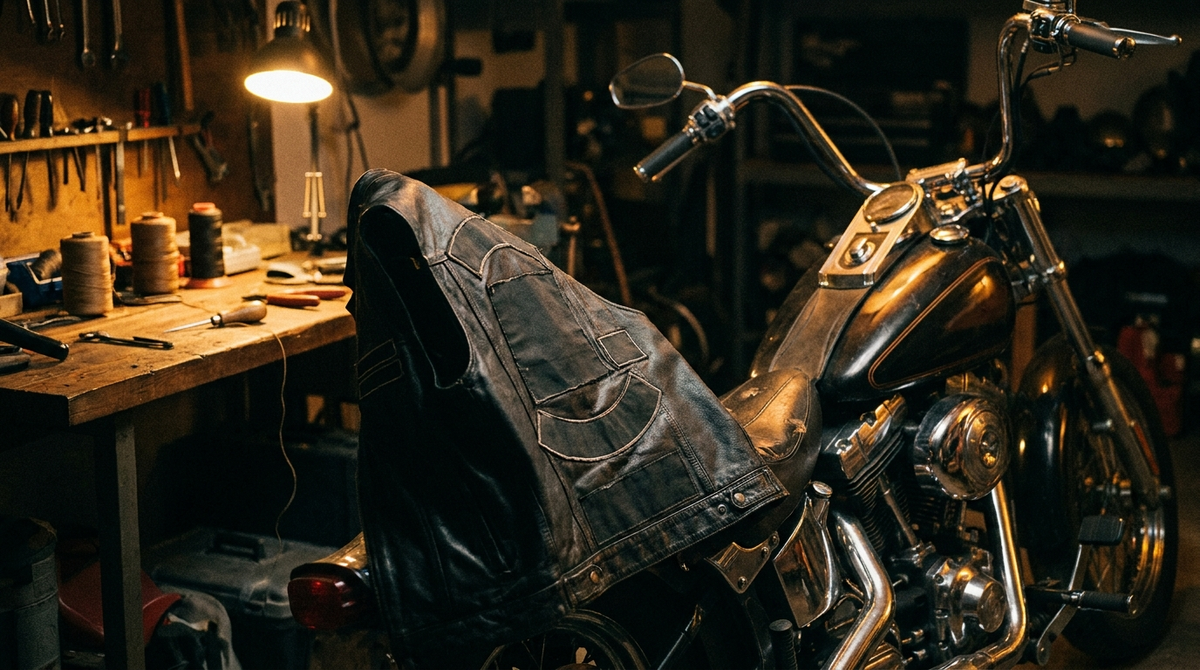
Biker patches are a language. The vest (the "cut") tells you who a rider is, where they belong, and what they've been through, all without a word. A three-piece patch with rockers marks a member of a motorcycle club. A single one-piece patch usually means a riding club or brand. And the little diamond that says "1%"? That one traces back to a single throwaway comment made after a rowdy weekend in Hollister, California in 1947. Here's how to read a cut like you've been around, and the unwritten rules that keep new riders out of trouble.
In this article
- What is a biker cut?
- What do the rockers and three-piece patches mean?
- What does the 1% diamond patch mean?
- Biker patch types at a glance
- What patches should you never wear?
- Can regular riders wear patches?
- FAQ
What is a biker cut?
A cut (also called a kutte) is a denim or leather vest with the sleeves removed, worn over a jacket or t-shirt. The name comes from the early days when riders literally cut the sleeves off surplus denim jackets so they wouldn't snag on handlebars, and so their club colors sat clean across the back.
To a club member, the cut is not clothing. It's the single most important thing they own that isn't the bike. It carries their club's colors, their earned patches, and years of miles. That's why the first unwritten rule of biker culture is simple: never touch another rider's cut. Not to admire it, not to move it off a barstool, not ever. Grabbing someone's colors is treated about the same as grabbing the person.
What do the rockers and three-piece patches mean?
Flip through any rally crowd and you'll see the back of a vest carries the real information. A full club patch set typically has three pieces:
- Top rocker: the curved bar across the shoulders with the club's name.
- Center patch: the club's emblem or logo, the "colors" themselves.
- Bottom rocker: the curved bar at the bottom, usually the territory or chapter (a state, a city, or "Nomads" for members without a fixed chapter).
A three-piece patch generally signals a traditional motorcycle club (MC) with prospecting, votes, and earned membership. A two-piece patch often marks a club in transition or one that deliberately avoids the full three-piece structure. A one-piece patch usually means a riding club, a veterans group, or a brand, social riders rather than a traditional MC.
Members don't buy their way in. A prospect can spend a year or more earning the right to wear the full set, one piece at a time. That's why unearned patches are taken seriously (more on that below).
What does the 1% diamond patch mean?
The 1% patch is the most famous symbol in motorcycle culture, and it started as an insult that got adopted as a badge of honor.
After the July 1947 Gypsy Tour rally in Hollister, California turned into a headline-grabbing weekend of drinking and street racing, the story goes that the American Motorcyclist Association reassured the public that 99% of motorcyclists were law-abiding citizens, and the trouble came from the last one percent. The outlaw clubs of the era looked at that math and said: fine, we're the one percent. The diamond-shaped "1%er" patch was born, and the Hollister weekend went on to inspire the 1953 film "The Wild One" with Marlon Brando.
Today the 1% diamond specifically identifies members of outlaw motorcycle clubs, clubs that deliberately operate outside AMA sanctioning. It is the single clearest example of a patch you do not wear unless it's yours. Wearing a 1% diamond as a fashion statement around the wrong crowd is a fast way to have a very bad night.
Biker patch types at a glance
| Patch | What it means | Who can wear it |
|---|---|---|
| Three-piece (rockers + colors) | Full member of a traditional MC | Patched members only, earned through prospecting |
| 1% diamond | Member of an outlaw club | 1%er club members only |
| One-piece patch | Riding club, veterans group, or brand | Open membership, usually anyone who joins |
| Prospect rocker | Probationary member earning his colors | Prospects, as issued by the club |
| Memorial patch ("In Memory Of") | Honors a fallen brother or sister | Anyone honoring someone real to them |
| Flags, skulls, humor patches | Personal expression: country, attitude, dark humor | Any rider |
What patches should you never wear?
The fastest way for a new rider to get schooled in a parking lot is wearing something that wasn't earned. Keep these off your vest:
- Any club's colors or logo you're not a member of. Including "just the design" on a t-shirt from an outlaw club, unless it's official support gear you're entitled to wear.
- A three-piece patch layout for your own made-up "club." The structure itself signals MC status, and real clubs in your area will notice. Many territories expect new clubs to get a nod from the dominant club before flying a bottom rocker at all.
- The 1% diamond. Covered above. Not a fashion accessory.
- Rockers naming a territory. Claiming a state or city on your back is a statement, and someone may show up to discuss it.
- Earned rank or office patches like "President," "Sergeant at Arms," or "Road Captain" when you hold no such office.
None of this is law. All of it is enforced anyway.
Can regular riders wear patches?
Absolutely. Most riders on the road are independents, and there's a whole world of patches that belong to everyone: flag patches, memorial patches, rally pins from Sturgis or Daytona, skull art, and the kind of dark-humor one-liners that make a stranger at a gas station nod in respect.
The safe lane is simple: express yourself all day long, just don't imitate club structure. A vest covered in rally patches, a back patch that's clearly a brand or a joke, or no vest at all with a loud shirt underneath, that's the independent rider's uniform. Your attitude does the talking, and nobody's checking your paperwork.

...and like maybe 3 people. Back print with the Skull Society logo on the chest. Printed in the USA.
Patch etiquette: the short version
If you remember nothing else, remember these five rules. They'll carry you through any rally, bar, or gas stop in the country:
- Never touch another rider's cut. Not even as a compliment.
- Don't wear what you didn't earn. Colors, rockers, rank, or the diamond.
- Don't ask club members what their patches mean. If they want you to know, they'll tell you.
- Don't photograph colors without asking. Especially not at a rally, especially not up close.
- When in doubt, be respectful and buy the next round. Works everywhere.
New to the scene? Our guide to biker bar etiquette covers the rest of the unwritten rules, and if the slang is still new, start with what a squid is before someone calls you one.

The honest truth, printed across your back. Available as tee, long sleeve, or hoodie.
Frequently asked questions
What does a 3-piece patch mean?
A three-piece patch (top rocker with the club name, center emblem, bottom rocker with the territory) identifies a full member of a traditional motorcycle club. It is earned through a prospecting period, not purchased, and wearing the layout without membership is a serious breach of biker etiquette.
What does 1%er mean on a biker vest?
It marks a member of an outlaw motorcycle club. The term comes from the aftermath of the 1947 Hollister rally, when the motorcycling establishment claimed 99% of riders were law-abiding. Outlaw clubs embraced being "the one percent" and made the diamond patch their symbol.
Is it disrespectful to wear a vest with patches if you're not in a club?
No, as long as your patches don't imitate club structure. Rally patches, flags, memorial patches, humor patches, and brand back patches are all fair game for independent riders. Avoid three-piece layouts, territory rockers, club colors, and the 1% diamond.
Why can't you touch a biker's cut?
The cut carries a rider's colors and earned patches, and in club culture it represents the member himself. Touching it without permission is treated as a personal violation, roughly like grabbing the person by the collar. When in doubt, keep your hands off.
What's the difference between an MC and an RC?
An MC (motorcycle club) is a traditional club with prospecting, votes, officers, and earned colors. An RC (riding club) is a social group anyone can join, usually wearing a one-piece patch. The difference matters: MCs take their structure and symbols seriously, and RCs deliberately stay clear of them.
No Prospecting Required
You don't need a patch to show what you ride for. Skull Society tees are designed and printed in the USA for riders who let the shirt do the talking.
Shop Biker Tees →Printed in the USA. Ships fast. Guaranteed to get nods at the gas station.

Leave a comment
This site is protected by hCaptcha and the hCaptcha Privacy Policy and Terms of Service apply.