
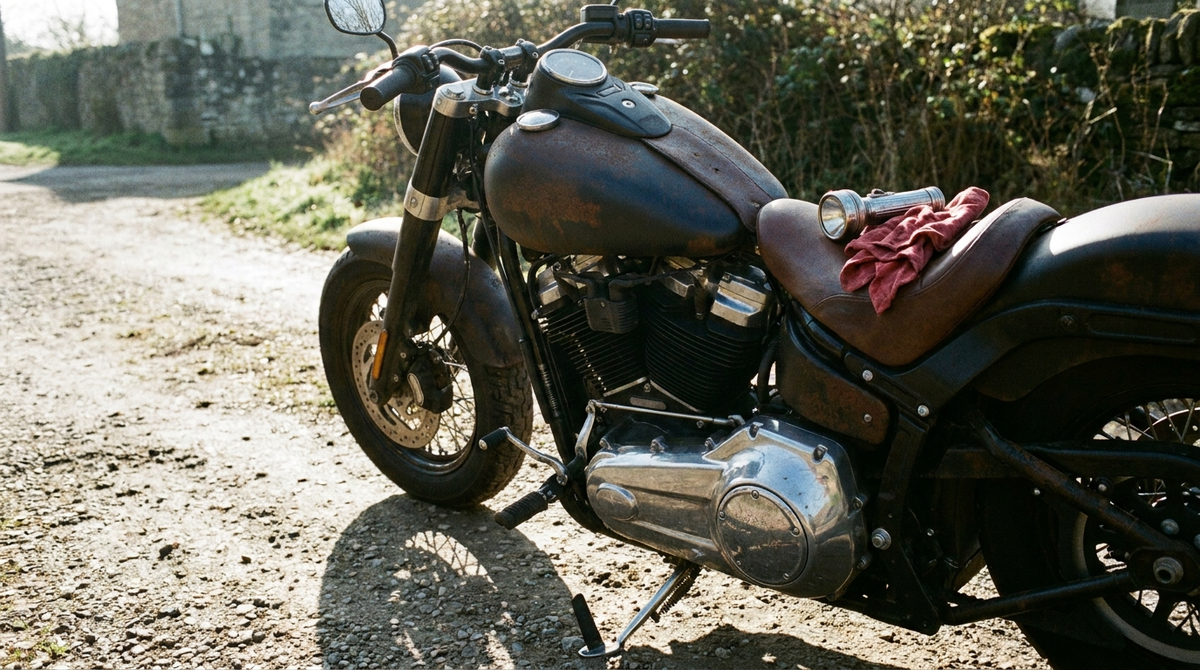
Buying a used Harley comes down to ten checks: the VIN and title, service records, a cold start, leaks, tires and brakes, the drive belt, suspension and steering, electrics, the mod list, and a proper test ride. Run all ten and you will catch the vast majority of expensive surprises before money changes hands. Skip them and you are trusting a stranger's word on a machine with ten thousand moving miles behind it. Used bikes are where the smart money rides, a well-kept Harley that already took its depreciation hit is one of the best deals on two wheels. This checklist is how you make sure you are buying the well-kept one.
In this article
- What should you check before you even see the bike?
- The 10-point used Harley inspection checklist
- What are the deal-breaker red flags?
- How do you know if the price is fair?
- FAQ
What should you check before you even see the bike?
Half the checklist happens from your couch. Before you burn a Saturday driving out to look at somebody's Road King, do three things:
- Run the VIN. The NICB's free VINCheck flags stolen bikes and total-loss salvage records in about a minute. If the seller will not text you the VIN up front, that tells you everything.
- Ask for the title photo. The name on the title should match the person selling it. "My buddy is selling it for me" plus "the title is at my cousin's place" equals walk away.
- Ask one open question: "What's been done to it?" A good owner will talk your ear off about oil changes, the stage 1 kit, and the new battery. A flipper will say "runs great" and change the subject.
What's in the 10-point used Harley inspection checklist?
Show up with a flashlight, a rag, and cash you have not committed. Then work the list in order:
- VIN and frame. Match the frame VIN to the title. Look for grind marks, re-stamps, or fresh paint around the neck, and check the frame for cracks or crash-bent tabs.
- Service records. You want receipts, a stamped book, or at least a folder of oil and parts orders. No paper trail means you assume every service is overdue and price accordingly.
- Cold start. Tell the seller not to warm it up before you arrive, and touch the engine to make sure they listened. A cold start reveals hard starting, smoke, lifter clatter, and weak batteries that a warm engine hides.
- Leaks and weeps. Look under the bike, around the rocker boxes, the base gaskets, the primary, and the fork seals. A faint weep on an older air-cooled twin is normal life; a wet spot on the ground is a negotiation, or an exit.
- Tires and brakes. Read the date code on the sidewall, tires over five or six years old need replacing no matter how much tread is left. Check the rotors for deep grooves and the pads for meat. Budget several hundred dollars if both ends need rubber.
- Drive belt and sprockets. Turn the rear wheel and inspect the belt for cracks, missing teeth, and stone damage. Belts last a long time but they are not cheap to replace, and a rock hole means the clock is ticking.
- Suspension and steering. Bounce the front end and watch for fork oil on the sliders. With the front wheel off the ground, the bars should sweep smoothly with no notch in the center, a notchy click means worn neck bearings.
- Electrics. Every light, both signals, horn, gauges, and any accessories. Then look under the seat: a rat's nest of crimped taps and electrical tape from a hacked-in stereo or LED kit is future gremlins you will own.
- The mod list. Bolt-on pipes and a tuner are normal Harley life. What you care about is whether the work was done right, a proper tune with the exhaust, quality parts, and ideally the stock parts in a box in the garage.
- The test ride. Clutch takeup, smooth shifts through every gear, no wobble at speed, no pull under braking, no death rattle at idle. If the seller refuses any test ride even with cash in hand as security, that is your answer.

... and like maybe 3 people. The official uniform for going to "just look at" a bike you're definitely buying. Printed in the USA.
What are the deal-breaker red flags?
Some problems are bargaining chips. These are not:
| What you find | Verdict | Why |
|---|---|---|
| Tampered or mismatched VIN, no title in hand | Walk away | You may be buying a stolen bike or a paperwork nightmare you cannot register |
| Salvage or rebuilt title at a clean-title price | Walk away | Crash history you cannot see, and resale value that never recovers |
| Knocking bottom end, gray or glittery oil | Walk away | Engine work on a big twin can cost more than the bike is worth |
| Old tires, worn pads, weepy fork seals | Negotiate | Normal wear items, get quotes and take them off the price |
| Tasteful bolt-ons with stock parts included | Green light | Somebody else paid retail for upgrades you get nearly free |
How do you know if the price is fair?
Pull the book value from J.D. Power's motorcycle values, then sanity-check it against what the same model, year, and mileage actually sells for in your area. Miles matter less on a Harley than condition and records, a documented 40,000-mile bike beats a mystery 15,000-mile bike every time.
Model choice matters too, because not all Harleys age equally at resale. Before you commit, read our breakdowns of the 7 Harleys that hold their value best and the 3 that lose it fast. Buying a value-holder used is the cheat code: the first owner ate the depreciation, and you get most of it back when you sell.
Then negotiate off your inspection notes, not off vibes. "It needs tires, a belt is coming, and there are no service records" moves a price. "That's a lot of money" does not.
Frequently asked questions
What mileage is too high for a used Harley?
There is no magic number. A well-maintained big twin will run past 100,000 miles, so judge condition and service history over the odometer. A documented high-mile bike is usually a better buy than a neglected low-mile one.
How do I check if a used motorcycle is stolen?
Run the VIN through the NICB's free VINCheck tool and make sure the frame VIN matches the title exactly. Any sign of tampering around the stamped VIN, or a seller who will not share it, ends the deal.
Should I buy from a dealer or a private seller?
Dealers cost more but often include an inspection, a limited warranty, and clean paperwork. Private sellers are cheaper and you can learn the bike's real history face to face. Either way, the 10-point checklist stays the same.
Are aftermarket modifications a red flag on a used Harley?
Quality bolt-ons like pipes, bars, and seats are normal and can be a bonus, especially with the stock parts included. Be wary of cut wiring, cheap parts, engine work with no receipts, or a bike that has clearly been ridden hard to show off the mods.
What does a used Harley inspection cost at a shop?
Most independent shops will do a pre-purchase inspection for roughly the cost of an hour or two of labor. On a four-figure or five-figure purchase, it is the cheapest insurance you can buy if you are not confident doing the checks yourself.
New-to-you bike. New shirt to match.
Found the one? Celebrate the right way. Skull Society tees are designed and printed in the USA for riders who let their back print do the talking.
Shop Motorcycles Make Me Happy →Guaranteed safe checkout. Easy returns.

Leave a comment
This site is protected by hCaptcha and the hCaptcha Privacy Policy and Terms of Service apply.