

Harley-Davidson's Milwaukee-Eight Engine: The Good and The Bad
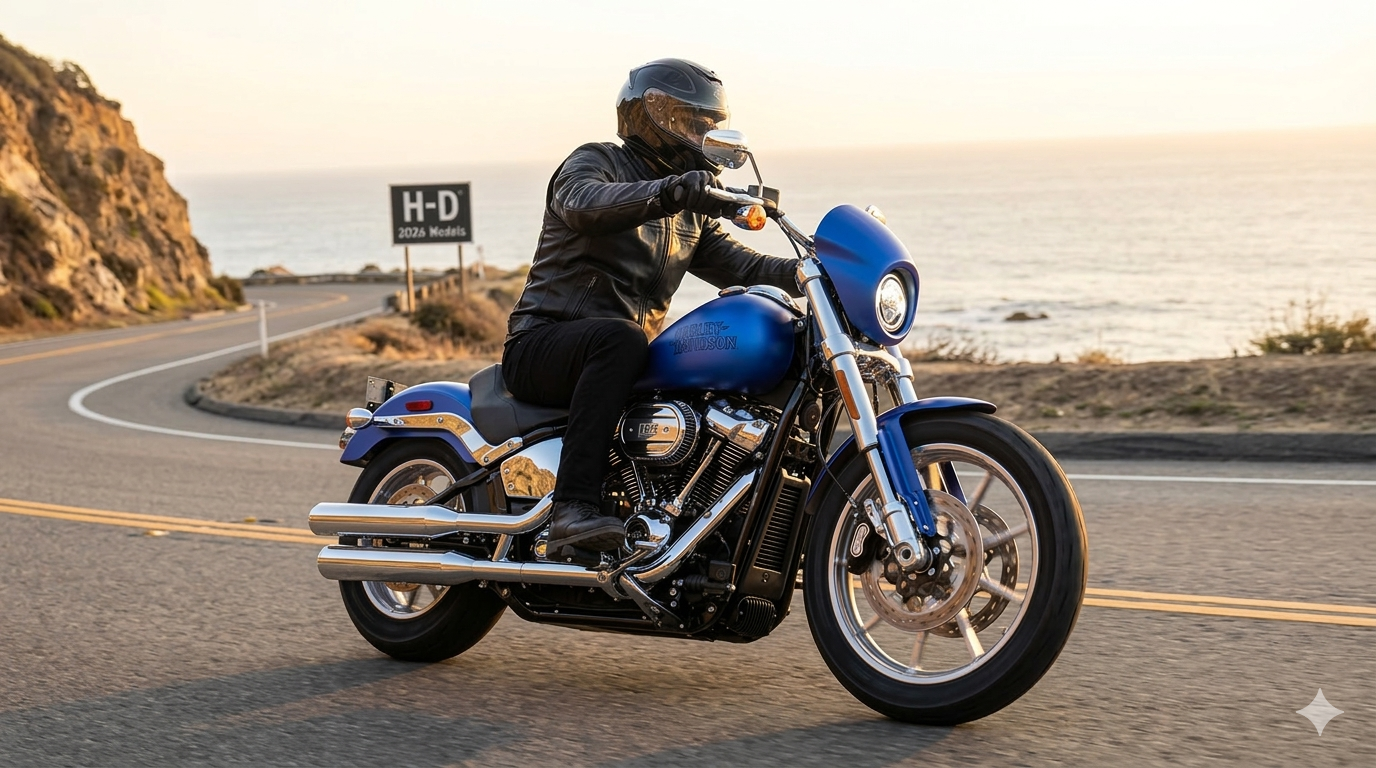
If you ride a big Harley, there's a good chance you've got a Milwaukee-Eight engine between your legs. Introduced in 2017, it replaced the Twin Cam V-twin that had powered Harley's big bikes for nearly 20 years. Harley needed a change — stricter emissions rules and riders wanting more power pushed them to build something new.
The name says it all: Milwaukee, where it was built, and Eight, for the eight valves inside its two cylinder heads. It's the ninth generation of Harley's legendary Big Twin engine family — and it came with some big changes under the skin.
The Good: Smoother and Smarter
If you've ever ridden a Twin Cam, the first thing you'll notice about the Milwaukee-Eight is how much smoother it is. Harleys are known for their shake and rumble, and that's part of the charm — but the Milwaukee-Eight uses a counterbalancer to cut about 75% of the engine's vibration while you're sitting still. That means you can feel that iconic heartbeat at a red light without rattling your teeth. You can still hear the classic "Potato-Potato" exhaust sound, and long rides become a whole lot less tiring. Five hundred miles in the saddle? No problem.
Heat was another big issue Harley tackled with this engine. Air-cooled engines can run hot, which causes all kinds of problems. The base Milwaukee-Eight 107 uses precision oil cooling around the cylinder heads — the hottest part of the engine. The bigger touring models add liquid cooling to the heads, like a car radiator, to keep temps in check. Harley also moved the rear exhaust pipe so it doesn't blast heat onto the rider or passenger. The result is a cooler, more comfortable ride.
The Good: Serious Power
The Milwaukee-Eight didn't just get smoother — it got stronger too. Compared to the Twin Cam 103 it replaced, the new engine pumped out about 11% more torque and 11% better acceleration. That's not just marketing talk — you feel it every time you roll on the throttle.
The numbers back it up. The 107 cubic-inch version makes around 111 pound-feet of torque at just 3,250 RPM. The bigger 117 cranks out up to 130 pound-feet. In plain terms, that means massive pulling power at low speeds — perfect for highway passing and hauling a loaded touring bike down the road.
The Milwaukee-Eight also charges your battery 50% faster at idle. That means you can run heated grips, a GPS, Bluetooth audio, and all your other accessories without worrying about killing the battery. Modern rider, meet a modern engine.
The Bad: Early Oil Problems
The early 2017–2019 Milwaukee-Eight models had some real issues that Harley had to fix. The biggest one was called "sumping." Basically, the oil pump wasn't strong enough to pull oil back out of the engine fast enough. Oil would pool at the bottom of the engine instead of flowing back to the tank like it's supposed to. That extra oil caused drag on the moving parts, added air bubbles to the oil, hurt performance, and caused extra wear. Harley fixed this with a new oil pump design in 2020.
Some early engines also had oil leaking from the transmission into the primary case — not ideal. And some 114-cubic-inch engines had a serious problem where the flywheel could shift out of position on the crankshaft. If that happened, the whole crankshaft could be destroyed. These weren't small fixes — some riders had to replace major engine parts.
The Bad: Purists Aren't Happy
For the diehard Harley faithful, the Milwaukee-Eight feels a little too... polished. The violent shaking, the mechanical clatter, the raw and rowdy character that defined Harley for a hundred years — a lot of that got smoothed away. The Milwaukee-Eight is powerful and efficient, but some riders feel it lost a piece of what made Harleys feel like Harleys.
The engine is also more complex than what came before it. Two of the four spark plugs are hidden under the gas tank, and the cooling system adds more parts to deal with. Wrenching on your bike in the driveway on a Sunday afternoon? That got more complicated. The 114 version also had some quirks, including radiator clogs, clutch issues, rattling noises, and cold-start problems.
Bottom Line
The Milwaukee-Eight is a polarizing engine — riders either love it or wish Harley had left well enough alone. But the facts are hard to argue with. It's the most powerful and most efficient air-cooled Harley ever built. It meets modern emissions standards, makes serious power, runs cooler, and keeps you comfortable on long hauls.
It may not have the same rough-edged soul as the engines that came before it — but it's proof that Harley-Davidson knows how to evolve without losing what matters most.

Leave a comment
This site is protected by hCaptcha and the hCaptcha Privacy Policy and Terms of Service apply.