
The biker wave is a low, left-handed wave with two fingers pointed toward the road, and it means "I see you, ride safe, and keep two wheels on the ground." Riders throw it to each other when they pass on the highway, regardless of brand, bike or patch. Nobody is required to do it, nobody hands out a rulebook, and yet almost every rider in America learns the motorcycle wave within their first week on two wheels. It is part greeting, part respect and part unspoken promise that if you go down out here, the next rider is stopping.
Below we break down what the wave means, where it probably came from, how to do it without looking like you are hailing a cab, and when it is perfectly fine to skip it. Grab a coffee. This is the most important hand signal you will ever learn that is not in the DMV handbook.
What does the biker wave mean?
At its core, the motorcycle wave is a nod between people who understand the same thing. Every rider on the road accepts more risk than the minivan next to them, and every rider knows the feeling of a perfect curve, a sudden cold front or a bug to the teeth at 65 mph. The wave says all of that in half a second.
The most common meaning riders give for the two-finger, pointed-down version is "keep two wheels on the ground." It is a wish for the other rider to stay upright and get home safe. Some riders also read it as a low-key peace sign, and others just see it as a hello. All of them are right.
Where did the motorcycle wave come from?
Nobody has a signed document proving who threw the first wave, so treat every origin story as road legend. That said, a few theories show up again and again:
- The Harley and Davidson legend. The most popular story says William Harley and Arthur Davidson, the founders of Harley-Davidson, waved to each other when they passed on the street in the early 1900s. Other riders saw it, assumed it was the thing to do, and copied it. It is a great story. It is also impossible to prove.
- Post-war veterans. Another theory ties the wave to World War II veterans who came home and bought motorcycles in big numbers. In that version, the wave was a sign of respect between men who had served.
- Peace sign or V for victory. The two-finger shape looks a lot like both, so some riders believe the wave simply evolved from one of them and got lowered to keep the hand near the bars.
- Friendly 1960s advertising. Some point to the wave of 1960s motorcycle ads that showed happy, waving riders and helped bring a whole new crowd into the sport.
Our take? It does not matter who started it. What matters is that it stuck for over a century, which is more than you can say for most motorcycle trends (looking at you, ape hangers on a sportbike).
How do you do the biker wave correctly?
Here is the standard American version, step by step:
- Use your left hand. Your right hand is on the throttle and front brake. Never let go of the throttle to wave. Ever.
- Keep it low. Drop your left hand down and slightly out from the bars, roughly level with your thigh or the tank.
- Two fingers down. Extend your index and middle fingers toward the pavement. Relaxed, not stiff like a salute.
- Time it right. Wave as the oncoming rider gets close enough to see you, not when they are already behind you.
- Get back on the bars. One to two seconds, then both hands where they belong.
If you are in a curve, working the clutch, or dealing with traffic, skip the wave. A slight head nod works just as well and every experienced rider understands it.
What are the different types of motorcycle waves?
Not every rider waves the same way. Here is a quick field guide to what you will see on the road:
| Wave | What it looks like | What it usually means |
|---|---|---|
| The Classic Low Wave | Left hand low, two fingers down | Ride safe, keep two wheels on the ground |
| The Nod | Quick dip of the helmet | Same respect, hands are busy |
| The Finger Lift | One or two fingers raised off the grip | Casual hello, very common on touring bikes |
| The Full Open Palm | Whole hand out, palm forward | Enthusiastic newbie or a very happy rider |
| The Foot Wave | Leg kicked out to the side | Thanks for moving over, mostly in Europe |
| The Pat on the Helmet | Hand tapping the top of the helmet | Police ahead, check your speed |

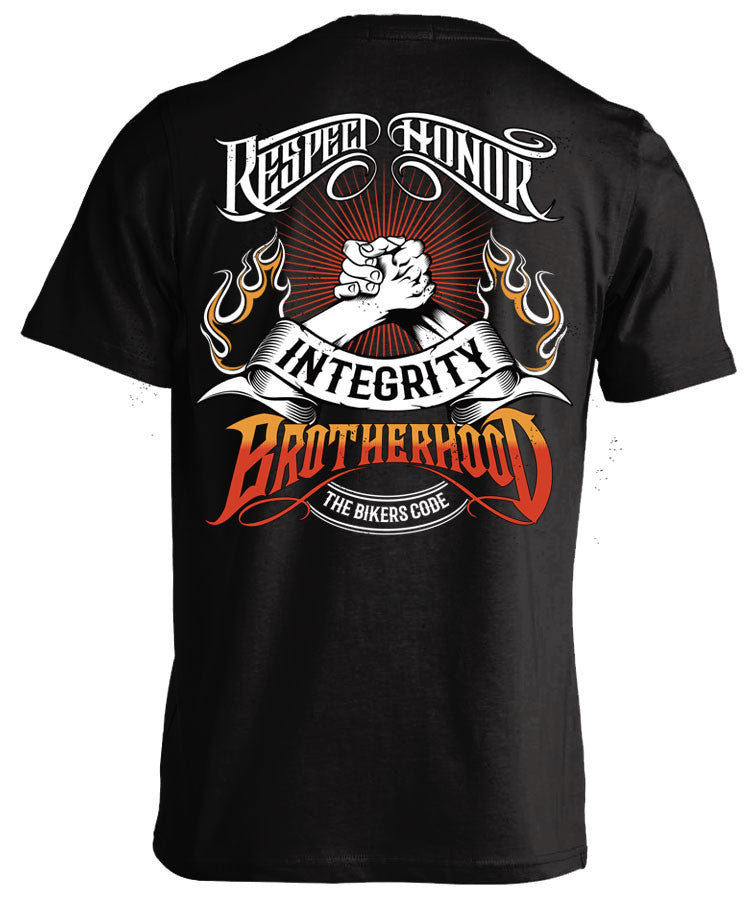
The Bikers Code Brotherhood
Respect, Honor, Integrity, Brotherhood. Basically the biker wave, printed on a shirt. From $24.97, printed in the USA.
Shop the ShirtDo Harley riders wave at sportbike riders?
They should, and most do. The old stereotype says cruiser riders only wave at other cruisers and sportbike riders are too busy tucked behind the windscreen to bother. On today's roads, that line has mostly faded. A rider is a rider. If you are out there on two wheels in the same weather and the same traffic, you have earned the wave.
You will still meet the occasional rider who ignores everyone on a different brand. Do not take it personally. Wave anyway. It costs nothing and it drives the snobs a little crazy.
When is it okay not to wave?
The wave is a courtesy, not a law. Skip it, guilt free, when:
- You are leaned into a curve or about to be.
- You are shifting, braking or working the clutch in traffic.
- You are in a city where a hundred bikes pass per hour. Your arm would fall off.
- Road conditions are sketchy: rain, gravel, wet leaves or heavy crosswinds.
- You are riding in a group and the bikes are tightly staggered. The lead rider can wave for everyone.
Safety always beats etiquette. Any rider who gets offended because you kept both hands on the bars in a tight corner needs to rethink their priorities.

Lone Wolf, Ride Free
For the solo rider who still throws the wave to every bike that passes. From $24.97, printed in the USA.
Shop the ShirtWhy does the biker wave still matter?
Because riding can be lonely and riding can be dangerous, and the wave fixes a little of both. It tells a brand new rider on a used starter bike that they belong. It reminds a veteran with 300,000 miles that the brotherhood is still out there. And it builds the kind of road culture where riders actually stop when they see a bike on the shoulder.
No other group of drivers does this. Nobody in a Camry is throwing two fingers at another Camry. That alone tells you something about what riding is.

Race The Rain, Ride The Wind
Only a biker understands. One of our all-time rider favorites. From $24.97, printed in the USA.
Shop the ShirtBiker Wave FAQ
Why do bikers wave with two fingers down?
Most riders say the two fingers pointed at the road mean "keep two wheels on the ground," a wish for the other rider to stay upright and safe. Keeping the hand low also means it stays close to the bars.
Which hand do you use for the motorcycle wave?
Your left hand. Your right hand controls the throttle and front brake, so it should never leave the grip to wave.
Is it rude not to wave back at another biker?
Not really. Most riders assume you were busy with the clutch, a curve or traffic. A nod works just as well when your hands are occupied.
Do bikers wave at scooters and trikes?
Trikes, absolutely. Scooters depend on the rider, but a growing number of motorcyclists wave at anyone on a powered two- or three-wheeler. When in doubt, wave.
Who invented the biker wave?
No one knows for sure. The most popular legend credits William Harley and Arthur Davidson in the early 1900s, but other theories point to post-war veterans or the peace sign.
Wear the Code, Throw the Wave
Bold, funny and proudly USA printed biker tees for riders who know what two fingers down really means.
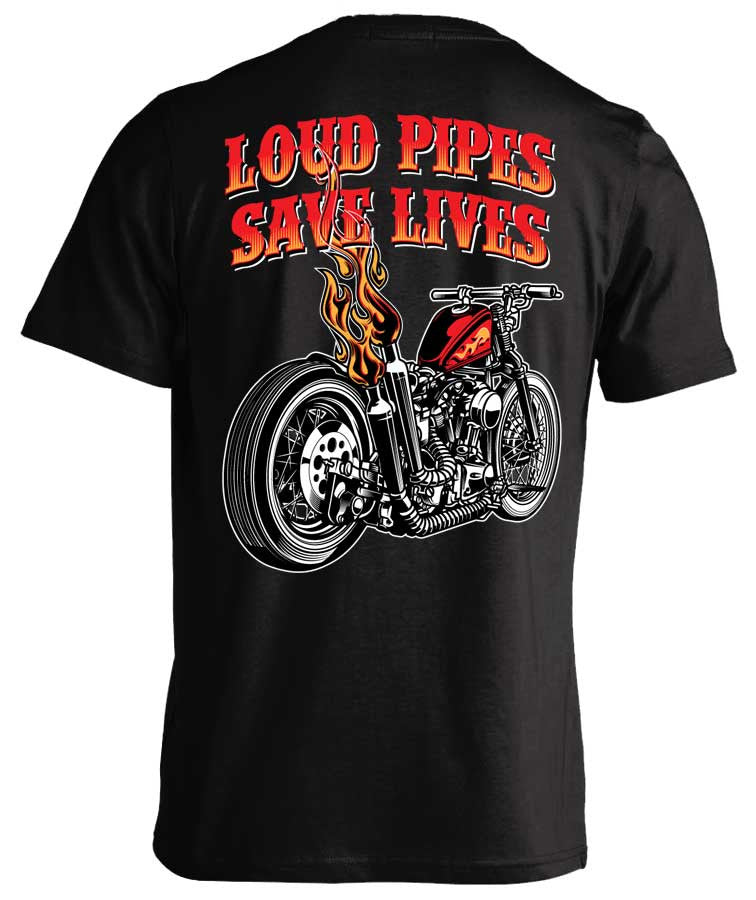
Shop Live Free Ride Free ($23.97) Browse All Biker Gear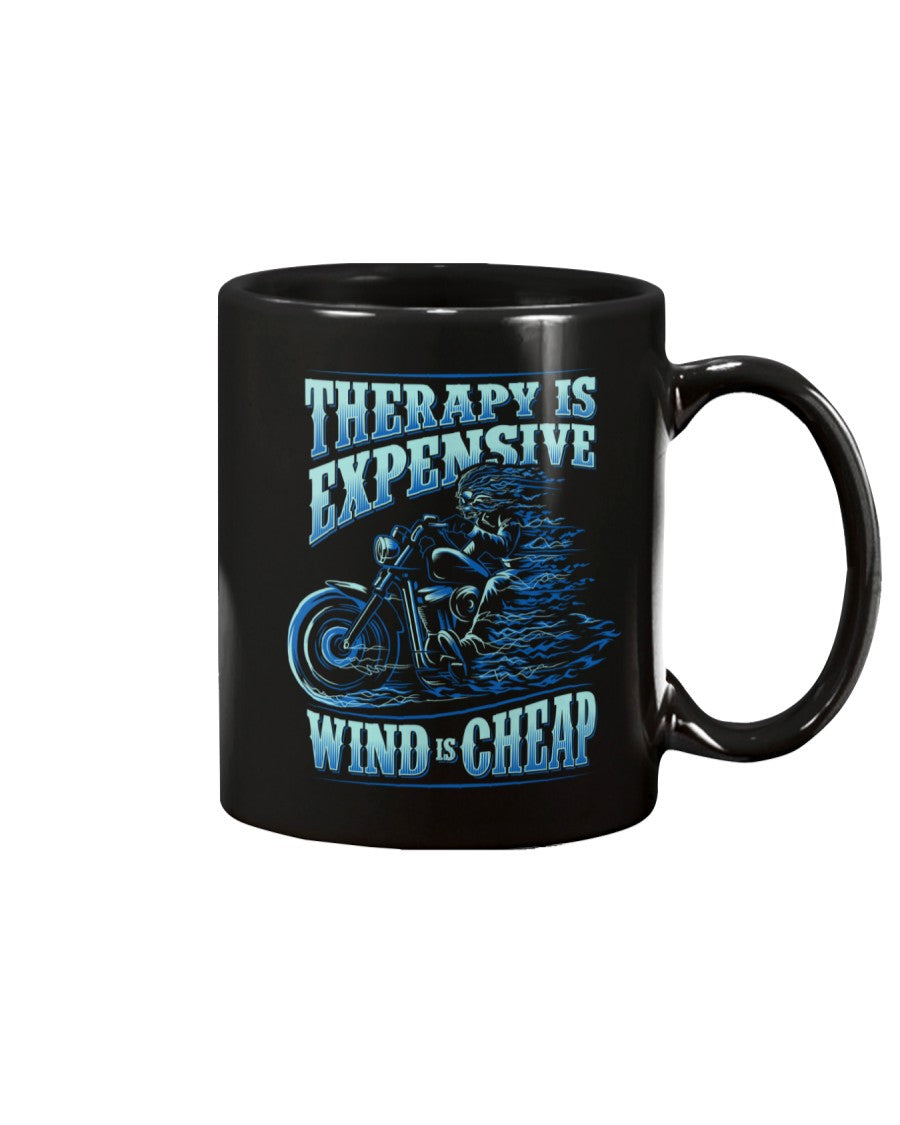

Leave a comment
This site is protected by hCaptcha and the hCaptcha Privacy Policy and Terms of Service apply.