
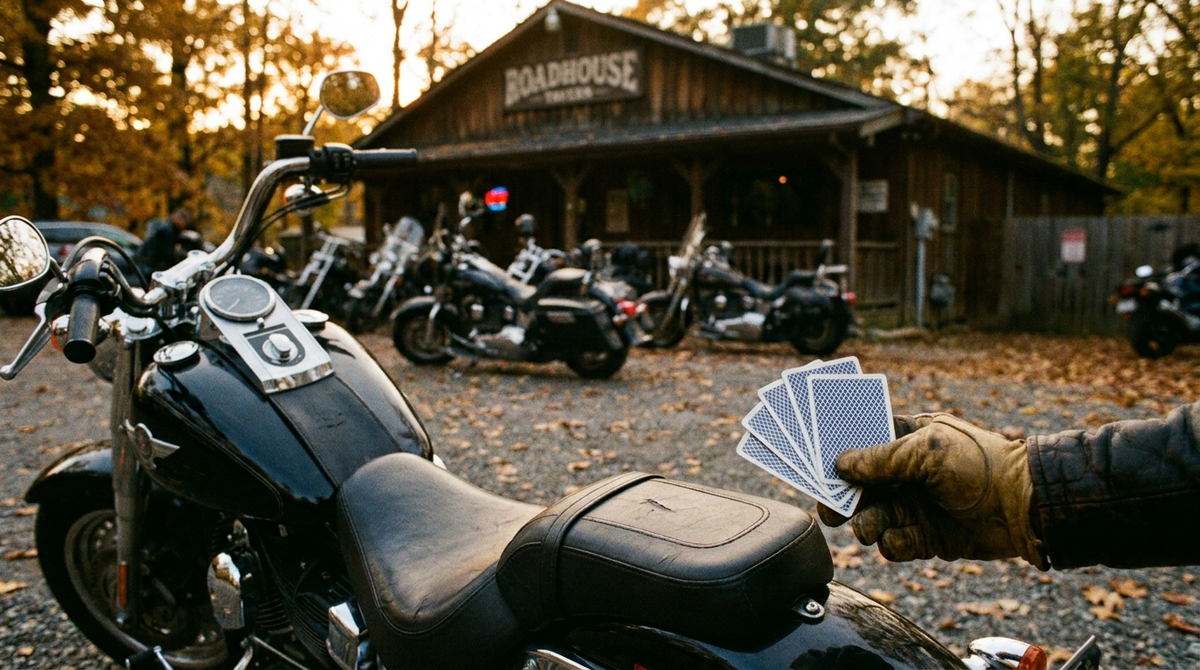
A poker run is an organized motorcycle ride, usually held for charity, where riders follow a set route with five stops and draw one playing card at each. At the finish, the rider holding the best five-card poker hand wins the pot or prize. It is not a race: there is no timing, no required speed and no riding skill needed beyond handling your own bike, which is exactly why poker runs are the most welcoming event in all of biking. Entry usually costs $10 to $25 per hand, routes typically cover 50 to 100 miles of good riding road, and the money raised goes to a cause the local riding community cares about. Here is how it all works, from first card to final hand.
In this article
- How does a poker run work, step by step?
- Why do bikers love poker runs?
- What should a first-timer know before riding one?
- Why is fall prime poker run season?
- FAQ
How does a poker run work, step by step?
Every poker run has its own flavor, but nearly all of them follow the same playbook:
- Register at the starting point. You pay the entry fee, sign a waiver and get a score sheet or card map. Most runs let you buy extra hands for a few dollars more, which raises your odds and puts more money toward the cause.
- Ride the route at your own pace. The organizers publish a route with four checkpoints between the start and the finish: bars, diners, bike shops, VFW halls, anywhere willing to host a wave of motorcycles for an afternoon.
- Draw a card at each stop. At every checkpoint a volunteer has you draw from a deck, then marks your sheet or seals the card. Five stops, five cards, one poker hand.
- Turn in your hand at the finish. The last stop is usually the party: food, music, vendors and the drawing. Best hand takes the top prize, and many runs pay a prize for the worst hand too, so even a junk draw keeps you in it.
- The cause gets the money. After prizes, proceeds go to the charity, the family or the memorial fund the run was organized for. That is the real point, and everybody knows it.
Here is what a typical run looks like at a glance:
| Poker run basics | Typical setup |
|---|---|
| Stops | 5 (start, 3 checkpoints, finish) |
| Route length | 50 to 100 miles of back roads |
| Entry fee | $10 to $25 per hand, extra hands cheaper |
| Time commitment | Most of a Saturday or Sunday |
| Winner | Best poker hand (often worst hand pays too) |
| Skill required | None. Pure luck by design |
Why do bikers love poker runs?
Because a poker run solves the oldest problem in group riding: how to spend a day on two wheels with a hundred other riders without anyone racing, waiting or babysitting. Since the cards decide the winner, the fastest bike in the pack has exactly the same odds as the oldest shovelhead running on hope. You ride your pace, they ride theirs, and everybody ends up at the same party.
They are also where riding communities show what they are made of. Poker runs raise money for veterans' groups, children's hospitals, injured riders and local families hit by hard times. When a rider goes down, the benefit run that follows is often organized within weeks, and bikers who never met the family will show up, pay for three hands and buy the t-shirt. If you want to understand biker culture beyond the movies, skip the myths and just stand at a poker run finish line for an hour.
And the format quietly fixes something else: it gives a ride a story. Any Saturday ride is good. A Saturday ride where you drew two aces at a bar called The Rusty Spur and lost the pot to a guy on a trike is one you will tell all winter.

The guy who wins the pot is never the one you expect. Printed in the USA on a heavyweight black tee.
What should a first-timer know before riding one?
Poker runs are beginner-friendly, but a little know-how keeps the day smooth:
- Arrive early. Registration lines get long, and the start window usually closes an hour or two after it opens. Early birds get coffee, parking and a relaxed roll-out.
- Bring cash. Entry fees, extra hands, 50/50 raffles, food stops and tip jars: poker runs run on small bills, and rural checkpoints do not always take cards.
- Ride your own ride. Nobody wins by arriving first, so there is zero reason to chase a faster group through corners you do not like. Groups form naturally; wave them past and enjoy the road.
- Mind checkpoint etiquette. Park where the volunteers point, keep the entrance clear, be patient at the card table and thank the stop for hosting. These businesses volunteer their Saturday too.
- Watch the clock. Hands usually must be turned in by a posted cutoff, often mid-afternoon. Lingering too long at stop three has cost more winning hands than bad luck ever has.
- Know the group basics. You will ride near strangers all day, so brush up on group ride hand signals and staggered formation before you go.
A long day of sun, wind and card tables is also a long day for your eyes. If you are squinting at score sheets in a dim bar and then riding into a low fall sun, a pair of riding glasses with built-in readers earns its keep by stop two.

Shatterproof riding sunglasses with built-in bifocal readers for the route sheet, the score card and everything past your front fender.
Why is fall prime poker run season?
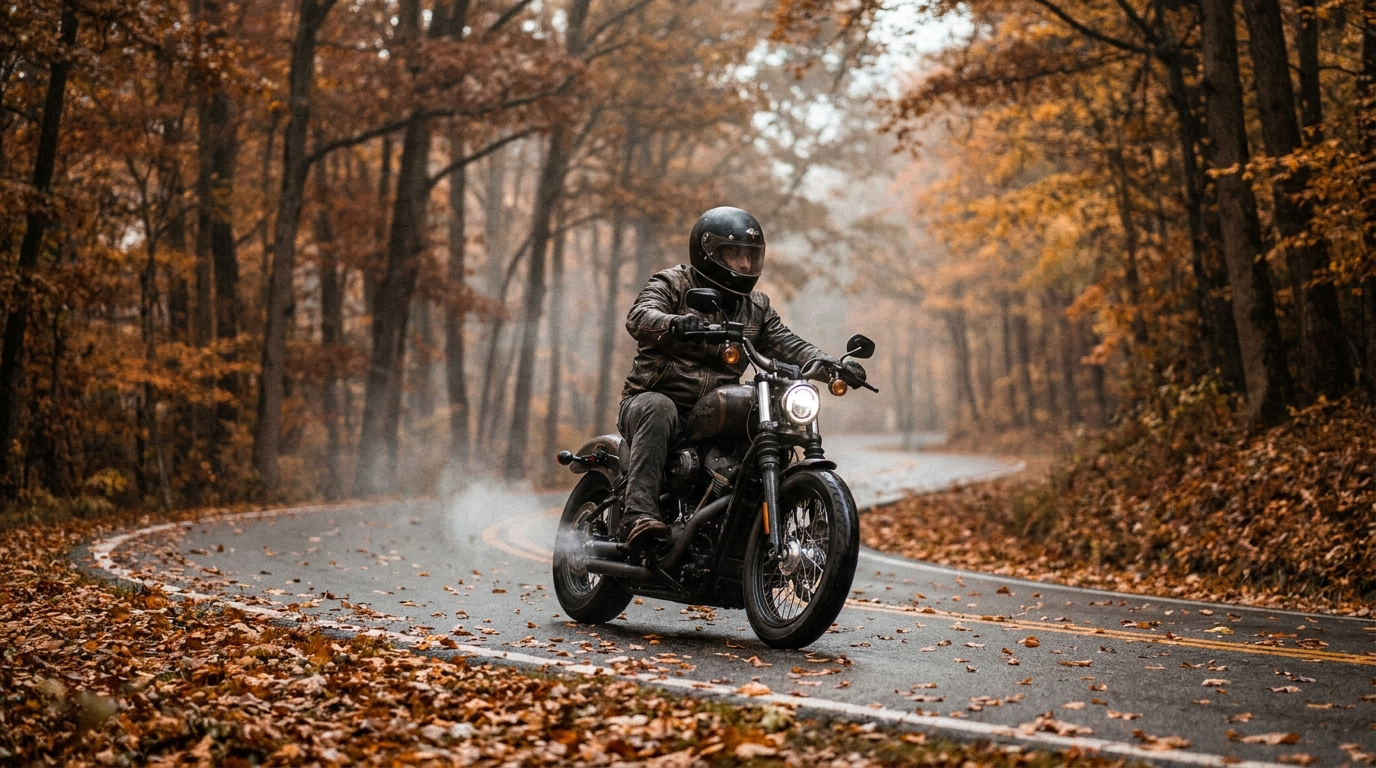
Spring and summer get the big rallies, but September and October belong to the poker run. The weather finally cooperates: cool mornings, warm afternoons and back roads lined with color instead of heat shimmer. Charities also aim for fall because it is the last call of riding season in most of the country. Clubs, dealerships and bars all know that if the community is going to dig deep one more time before the bikes go under covers, this is the window.
That makes right now the easiest time of year to find one. Check the corkboard at your local shop or bar, the events page of nearby dealerships, and the regional biker event calendars and Facebook groups for your state. Most weekends between Labor Day and Halloween, there is a run leaving within an hour of you. Pick a cause, pay for two hands and go make a story. Just keep an eye on the conditions: our guide to fall riding, wet leaves and deer season covers everything the season throws at you.
Frequently asked questions
Do I need to know how to play poker to ride a poker run?
No. Volunteers at the finish line rank every hand, and your score sheet tracks your cards for you. All you need to know is that a better poker hand wins, and the cards decide that, not you. Many runs even post a hand-ranking chart at the final stop.
Is a poker run a race?
No, and organizers go out of their way to make sure it never becomes one. Arriving first earns nothing, hands are drawn at random and the only deadline is a generous afternoon cutoff. Ride your own pace and enjoy the route.
What happens if I miss a checkpoint?
Rules vary by event. Some runs let you draw your missing cards at the finish, others score you on the cards you collected. Either way you can still turn in a hand, still eat, and still win door prizes. Read the rules at registration so you know before you roll out.
Can I join a poker run in a car or truck?
Usually yes. Most charity poker runs welcome cages, trikes and side-by-sides because the goal is raising money, not gatekeeping. Check the event listing, but do not let not riding stop you from supporting a good cause.
Are poker runs considered gambling?
Rules differ by state, which is why most events are run as charity fundraisers with donated prizes, and some award prizes by raffle instead of purely by hand. Organizers handle the legal side; as a rider, you are paying an entry donation for a ride and a chance at a prize.
Ride for the Cause. Dress for the Finish Line.
USA-printed tees, decals and gear for riders who show up when it counts.
Shop Skull Society →Printed in the USA. Backed by riders like you.

Leave a comment
This site is protected by hCaptcha and the hCaptcha Privacy Policy and Terms of Service apply.