
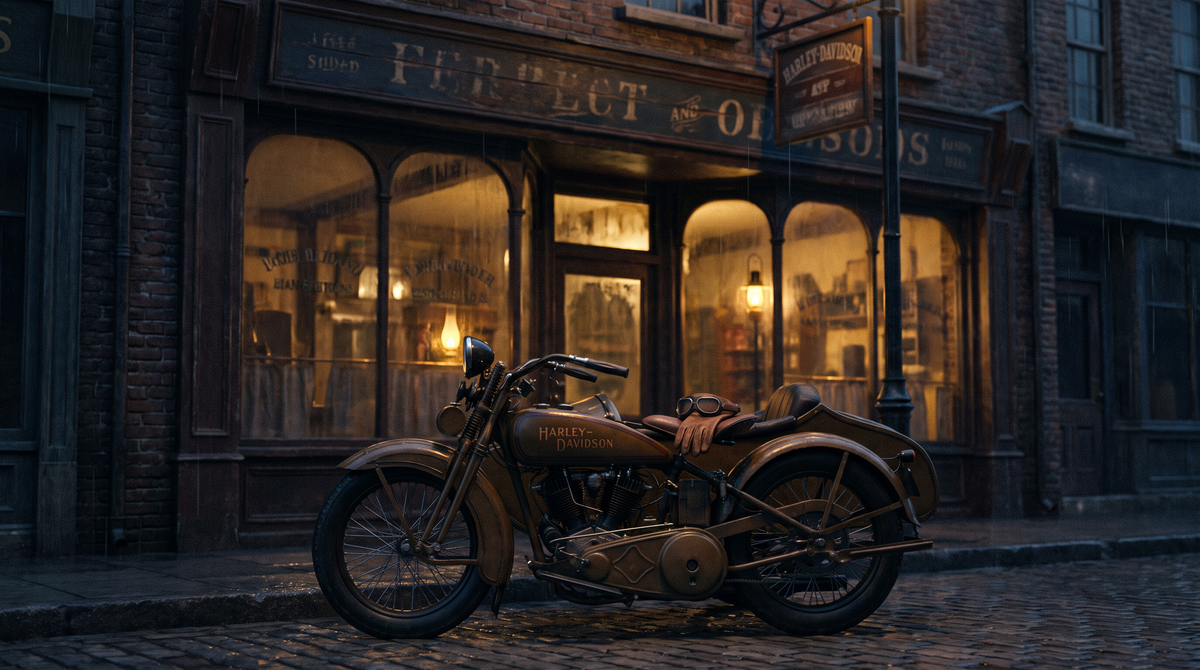
Lilly Farrow (born Lillian Beatrice Matheny, 1892) was the Ohio woman who took over A.D. Farrow Co. Harley-Davidson after her husband died in 1927 and ran it herself, making her one of the first women, and by most accounts the first, to own and operate a Harley-Davidson dealership in the United States. She did not just keep the doors open. She founded the Buckeye Motorcycle Club in 1924, promoted hill climbs, ice races and flat track events, and started rides that are still run today. The dealership she saved is now the oldest Harley-Davidson dealership in America, and in 2025 the Sturgis Motorcycle Museum put her in its Hall of Fame. A feature film about her, Iron Lilly, is aiming for theaters in late 2027. Here is the real story.
In this article
- How did a 20-year-old from Nelsonville end up selling Harleys?
- What happened when her husband died?
- How did Lilly Farrow build biker culture in Ohio?
- Was she really the first woman to own a Harley-Davidson dealership?
- What is her legacy today?
- FAQ
How did a 20-year-old from Nelsonville end up selling Harleys?
Lilly was born in Nelsonville, Ohio, a coal and brick town in the hills southeast of Columbus. In 1912 she married Alfred D. Farrow, and that same year the two of them did something almost nobody in Ohio had done yet: they became Harley-Davidson dealers. Alfred, 23 years old, ordered his first Harley on February 26, 1912. Lilly was 20. Harley-Davidson itself was barely nine years old, still building bikes in Milwaukee for a country that mostly got around by horse and train.
The shop started in Nelsonville and later moved to Columbus, where it could reach more riders. In those early years a dealership was a hardware store, repair shop and race team rolled into one. You sold a machine, taught the buyer to ride it, fixed it when it broke, and then talked him into racing it on Sunday. Lilly was in the middle of all of it from day one.
What happened when her husband died?
Alfred died young. Most accounts, including the Sturgis Motorcycle Museum, put his death in 1927. Lilly was in her mid-thirties with four children to raise and a motorcycle business that, in the eyes of nearly everyone in 1927, a widow was supposed to sell.
She did not sell. She took over A.D. Farrow Co. and ran it, through the tail end of the Roaring Twenties, straight into the Great Depression, and on through the Second World War. The film's promotional material tells it as a showdown: Harley-Davidson corporate sent the papers expecting the dealership to change hands, and Lilly refused to sign. That version comes from the movie's marketing, so treat the drama as dramatized until a primary source confirms it. What is not in question is the result. The dealership stayed a Farrow business, and a woman was running a Harley-Davidson store in an era when women had held the vote for only seven years.
Think about what that meant on a Tuesday afternoon. A woman ordering inventory from Milwaukee. A woman negotiating with parts suppliers, managing mechanics, extending credit to riders, and deciding which races the shop would back. Respect in that world was not handed out. It was earned one transaction and one race weekend at a time.

For the women who run the shop, the ride and everything else. Ladies cut, printed in the USA.
How did Lilly Farrow build biker culture in Ohio?
This is the part of her story that matters most, and the part the "first female dealer" headline skips. Lilly figured out a hundred years ago what every good dealership, club and rally organizer knows now: you do not sell motorcycles, you build a place where people ride them together. The store follows.
In 1924, three years before she was running the business alone, she founded the Buckeye Motorcycle Club, credited as the first uniformed motorcycle club in the United States. Matching uniforms in 1924 was a statement. It said riders were a group with an identity, not a scattering of hobbyists, and it planted the seed of everything from AMA club colors to the patches and cuts riders wear today.
She promoted racing too: hill climbs, ice races on frozen lakes, and flat track competitions that gave Ohio riders a reason to show up every weekend and a reason to buy the bike that could win. And she organized rides. The Endurance Ride she started in 1924 is still held today, nearly a century later, one of the oldest continuously run motorcycle events in the country.
Here is how her playbook lines up with what still works:
| What Lilly did (1920s) | What it looks like now |
|---|---|
| Founded a uniformed club (Buckeye MC, 1924) | Riding clubs, HOG chapters, patched MCs |
| Promoted hill climbs, ice races, flat track | Dealer-sponsored race teams and demo days |
| Organized rides (Endurance Ride, 1924) | Poker runs, charity rides, rally weeks |
| Made the shop the clubhouse | Bike nights, dealership events, online rider communities |
She was running community as a growth engine before anyone had a word for it. The riders she brought together bought their bikes from her, serviced them with her, and raced them under her banner. That loyalty is what carried A.D. Farrow through the Depression when plenty of dealers folded.

Lilly raised four children while running a Harley shop. Somewhere there is a grandma in your life who would get it.
Was she really the first woman to own a Harley-Davidson dealership?
Almost certainly the first well-documented one, and possibly the outright first. Here is where the sources land. The Sturgis Motorcycle Museum calls her the nation's first female motorcycle dealer. Powersports Business describes her as the first and only female motorcycle dealer in the United States for the first half of the 20th century. The dealership's own history is more careful and says she became "one of the first" female Harley-Davidson dealers.
The honest answer is that nobody kept a national registry of dealer owners in 1927, so the absolute "first" claim is hard to prove. What can be said without hedging: she was a woman who owned and ran a Harley-Davidson dealership starting in 1927, she did it for decades, and no earlier example has surfaced. That is a bigger deal than the trivia question. Riding into a dealership as a woman in the 1920s was unusual. Owning one was unheard of.
What is her legacy today?
A.D. Farrow Co. survived the Spanish Flu, two World Wars and the Great Depression, and it is now recognized as America's oldest Harley-Davidson dealership. It moved to its longtime home at 491 West Broad Street in downtown Columbus in 1941, and in 2019 Ricart Automotive, a Columbus car dealer group, acquired the business and kept the Farrow name on the sign.
The recognition Lilly never got in her lifetime is finally arriving. In 2025 the Sturgis Motorcycle Museum and Hall of Fame inducted her into its Hall of Fame and honored her memory with its Kickstands Down Award. And the feature film Iron Lilly is gearing up for a late 2027 theatrical release. Its team has spent years crossing the country, hosting private screenings, partnering with the motorcycle industry and building a grassroots following, which is about the most Lilly Farrow way to launch a movie you could invent.
Ride the Endurance Ride, buy a bike from A.D. Farrow, or just show up at a Columbus bike night, and you are standing in something a 35-year-old widow refused to let die in 1927.

For every rider who was told to sell the bike and decided to keep it instead.
Frequently asked questions
Who was Lilly Farrow?
Lilly Farrow (1892, Nelsonville, Ohio) co-founded A.D. Farrow Co. Harley-Davidson with her husband Alfred in 1912, took over the dealership after his death in 1927, and ran it while raising four children. She founded the Buckeye Motorcycle Club in 1924 and organized races and rides that still run today.
What is the oldest Harley-Davidson dealership in the United States?
A.D. Farrow Co. Harley-Davidson in Columbus, Ohio, founded in 1912. It has operated continuously for more than a century and has been at 491 West Broad Street since 1941. Ricart Automotive acquired it in 2019.
What was the Buckeye Motorcycle Club?
A riding club Lilly Farrow founded in Ohio in 1924, credited as the first uniformed motorcycle club in the United States. Its matching uniforms were an early version of the club identity riders now express through colors and patches.
Is Lilly Farrow in the Sturgis Motorcycle Hall of Fame?
Yes. The Sturgis Motorcycle Museum and Hall of Fame inducted her in 2025 and also honored her with its 2025 Kickstands Down Award.
When does the Iron Lilly movie come out?
The film is planned for a late 2027 theatrical release. Its producers have been previewing it at private screenings and motorcycle industry events in the meantime. Check the official site for updates, since release dates for independent films can move.
Long days in the saddle were part of Lilly's job a century ago, and they still are for the riders who carry it on. If reading a route sheet is getting harder than riding the route, a pair of riding glasses with built-in readers keeps you on the road longer.

Shatterproof riding sunglasses with bifocal readers built into the bottom of the lens. See the map and the road.
Built for Riders Who Don't Sell the Bike.
USA-printed tees, decals and gear for the women and men who keep the culture Lilly started alive.
Shop Skull Society →Printed in the USA. Backed by riders like you.
Sources: Iron Lilly, About Lilly; Motorcycle & Powersports News on the 2025 Sturgis Hall of Fame induction; A.D. Farrow Co. Harley-Davidson.


Leave a comment
This site is protected by hCaptcha and the hCaptcha Privacy Policy and Terms of Service apply.